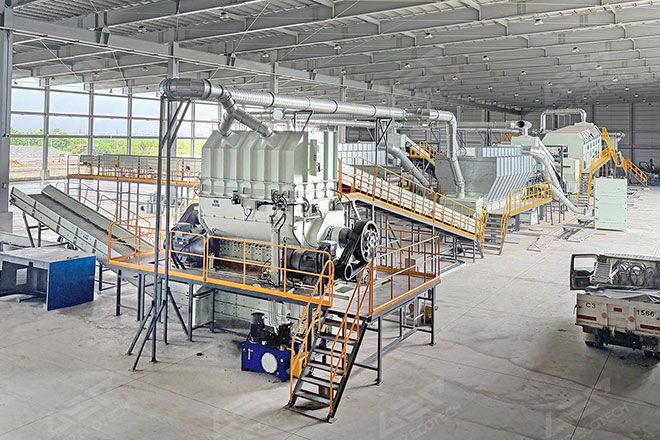
FRP (Fiber Reinforced Plastics), such as tanks and pipes, is valued for its strength and lightness but poses disposal challenges. Current treatment primarily involves physical and chemical recycling methods, both requiring effective shredding as a key step. Proper FRP waste treatment promotes resource circulation and environmental protection. GEP ECOTECH offers robust solutions for pretreating various FRP waste forms, ensuring controlled output size and enhanced recycling efficiency.
Wind Turbine Blades

Before Shredding

After Shredding
FRP Tube

Before Shredding

After Shredding
Damaged Fiberglass Part

Before Shredding

After Shredding
Industrial Production Leftovers

Before Shredding

After Shredding
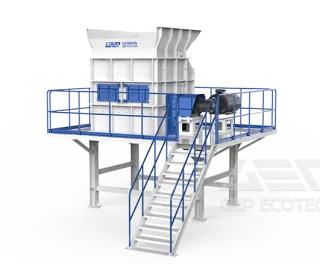
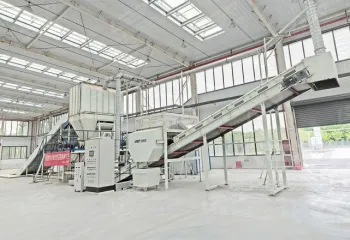
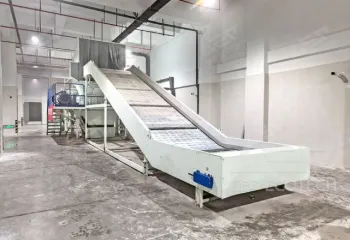
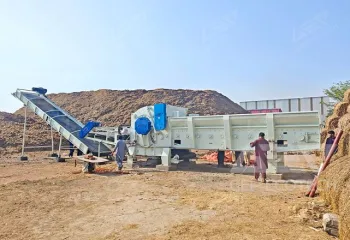
Our common FRP disposal line typically follows a systematic process. Initially, FRP waste is fed via a conveyor (e.g., Chain Plate Conveyor) into a Double Shaft Shredder for primary size reduction. The shredded material then passes under a Magnetic Separator to recover any embedded ferrous metals. Subsequently, the material is conveyed (often by a Belt Conveyor) to a Single Shaft Fine Shredder for further shredding, achieving a fine output (e.g., <30mm), which can be compacted by a Hydraulic Baler for easier handling or transportation. Throughout this process, a Pulse Dust Collector is optionally integrated to ensure clean operation. The outputs can be repurposed into composites, paints, or alternative fuels based on its purity and the differences of the mixture.

Chain Plate Conveyor

Double Shaft Shredder

Magnetic Separator

Belt Conveyor

Single Shaft Shredder

Belt Conveyor

Hydraulic Baler

Pulse Dust Collector
Note: This outlined process represents a general configuration, which is customizable to meet specific feedstock and final product requirements.
Tell us your material and capacity — our engineer will reply within 24h with a tailored solution.