
In municipal solid waste (MSW) processing, double-shaft shredders are generally the more common choice. However, four-shaft shredders also have their place. They are worth considering when a project requires more consistent and controlled output sizes, while aiming to avoid the complexity of a two-stage shredding line.
Four-Shaft Shredder Core Advantage: Controlled Output in a Single Machine
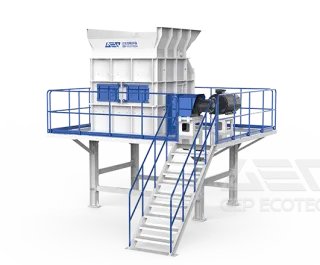
The main difference between four-shaft and double-shaft shredders lies in their rotor configuration. A four-shaft shredder uses two sets of cutting shafts. The upper shafts perform primary shredding, while the lower shafts further reduce the material. A screen at the bottom controls the discharge size.
This multi-stage design allows one machine to handle both coarse and finer shredding.
For MSW processing, this is particularly useful in three situations:
1. When Strict Output Size Requirements Apply
The screen controls the discharge size. Material smaller than the screen openings can pass through, while larger pieces remain in the shredding chamber for further cutting.
Typical applications include:
- RDF/SRF production: Preparing high-calorific waste, such as plastics and textiles, to a target size of approximately 50–80 mm or smaller, depending on downstream requirements.
- Gasification and incineration: Pre-shredding waste to improve feed consistency and reduce the risk of long or oversized pieces causing blockages.
2. When Processing Mixed and Bulky Waste
MSW may contain furniture, plastic drums, large packaging materials and other bulky items. A four-shaft shredder can combine primary and secondary size reduction in one machine, making the output easier to convey and process in downstream screening or sorting systems.
However, the actual performance depends on the material composition, feed size and machine configuration.
3. When a Compact, Single-Machine Solution Is Preferred
A conventional two-stage shredding line may consist of:
Double-shaft shredder → Conveyor → Magnetic separator → Secondary shredder
Although effective, this configuration requires more equipment, floor space and system integration.
A four-shaft shredder may combine primary and secondary shredding in one unit, making it an option for small- and medium-scale MSW projects, landfill waste treatment and on-site waste volume reduction where controlled output is required.
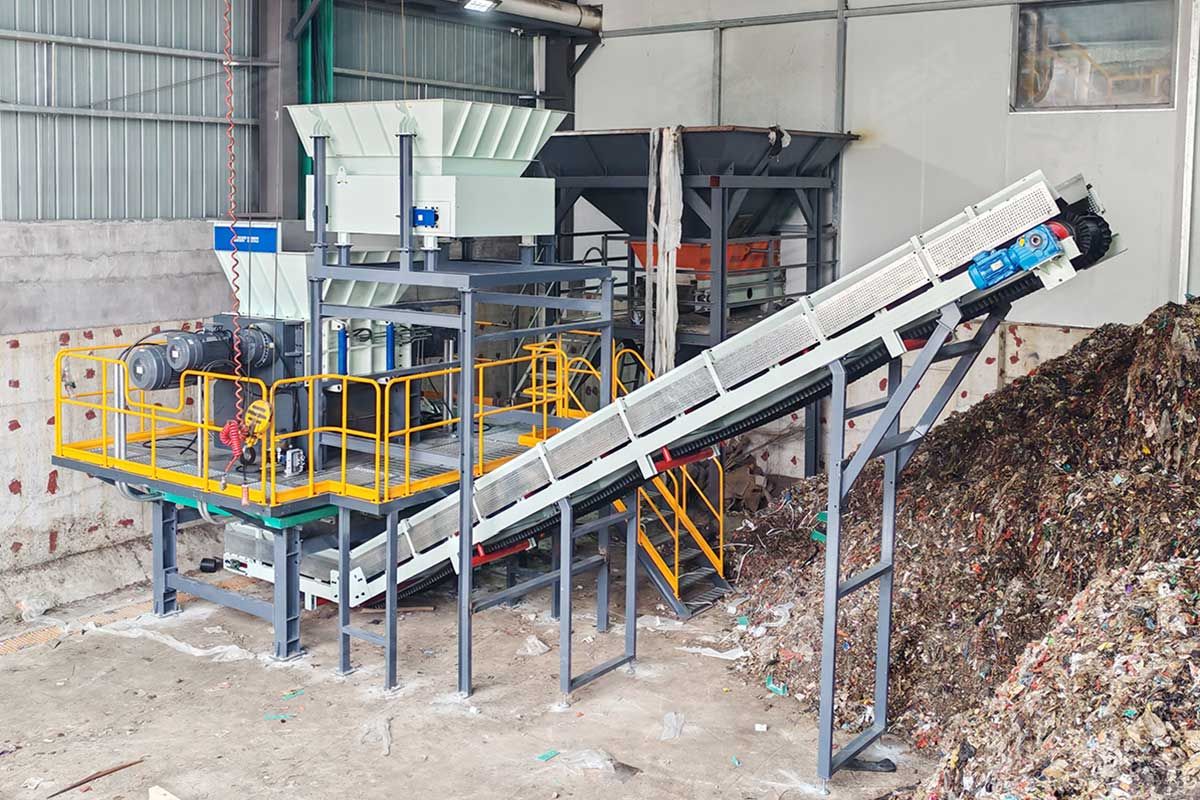
Four-Shaft Shredder for MSW-to-Methane Project(Click to Learn More About the Project)
When Is a Double-Shaft Shredder the Better Choice?
If the main objective is simply to reduce waste volume before transportation or landfilling, without strict output size requirements, a double-shaft shredder is usually the more economical option.
Its simpler structure can mean easier maintenance and lower system complexity. It is also suitable for handling bulky and tough materials.
Hard contaminants should also be considered. If the waste contains large quantities of stones or heavy metal objects, equipment configuration and protection measures must be carefully evaluated. A double-shaft shredder may be more practical in some applications.