
In the low-carbon track of thermal power in 2026, biomass co firing has become the most widely implemented mainstream route from an alternative solution. At present, there are over a hundred projects in China that involve biomass co firing and are planned for construction, covering various technical modes such as direct co firing and gasification coupling. It is the most mature and widely used choice among the three core low-carbon transformation routes of thermal power—biomass co firing, green ammonia co firing, and CCUS (carbon capture, utilization, and storage).
According to data from the China Electricity Council, as of the end of 2025, the installed capacity of biomass power generation in China will be 47.43 million kilowatts, accounting for 1.2% of the total installed capacity; The national biomass power generation is about 225 billion kilowatt hours, accounting for 2.1% of the total power generation.
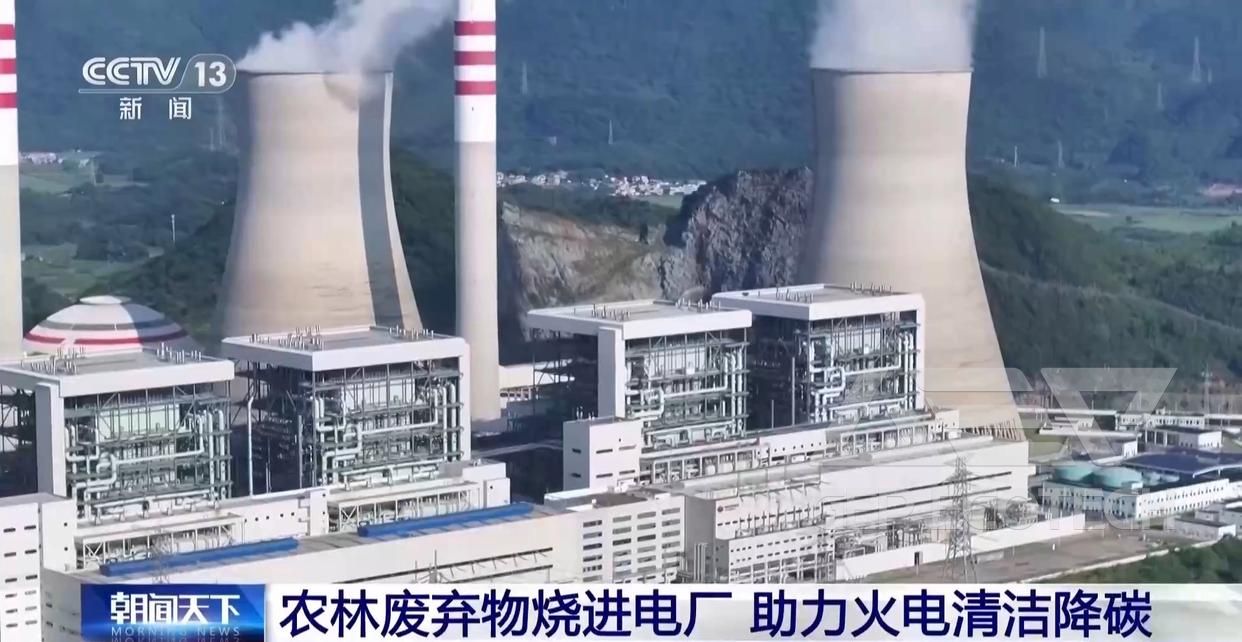
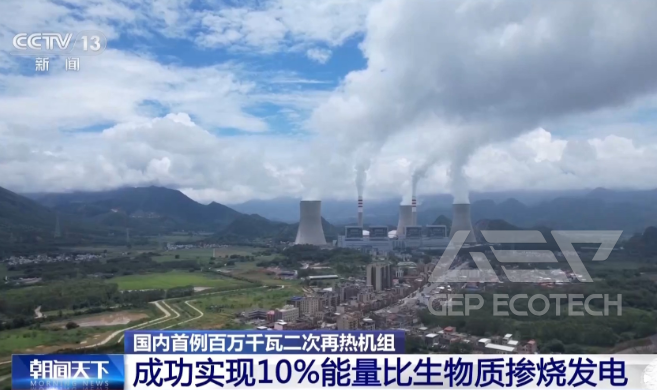
Recently, there has been another landmark development in the low-carbon field of thermal power in China: Unit 2 of Guangdong Qingyuan Power Plant has successfully achieved 10% energy ratio biomass co firing for power generation. This is the first domestic case of a million kilowatt secondary reheating unit achieving high proportion biomass co firing, filling the domestic technological gap. This unit adopts independent biomass combustion technology to shred and powder materials such as straw and furniture scraps, and then send them to the boiler for co combustion with coal powder. The core parameters such as furnace conditions, flue gas emissions, and unit load are all up to standard throughout the operation. The benefit account is also clear: it can replace 142000 tons of standard coal every year, reduce carbon dioxide emissions by 347000 tons, and the ecological benefits are equivalent to planting 1.8 million trees. This single unit alone can consume over 360,000 tons of agricultural and forestry waste annually.
From using agricultural and forestry waste as firewood to using it as electricity, there is a process that must be addressed—pretreatment.
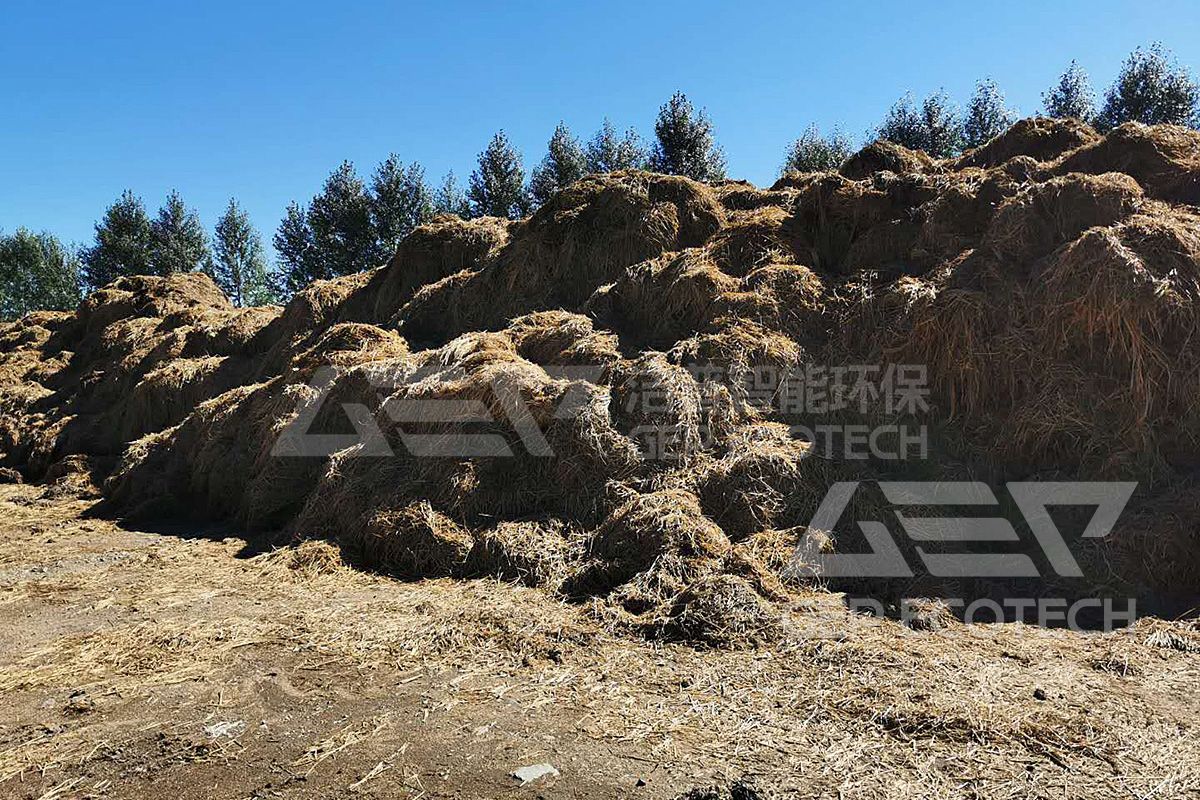
Agricultural and forestry waste originally came in various forms: straw was elongated, bark was flaky, and wood scraps were blocky. Directly throw it into the boiler? no way. Uneven material size leads to insufficient combustion; Doped iron nails and stones can wear down equipment; A high moisture content can affect the calorific value. Preprocessing is the process of transforming these miscellaneous "waste materials" into standardized "industrial fuels".
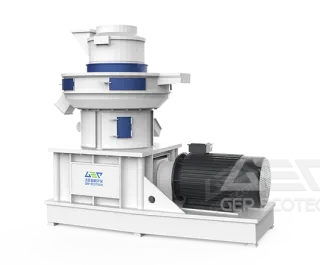
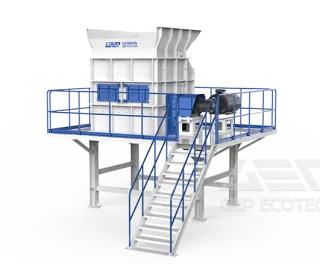
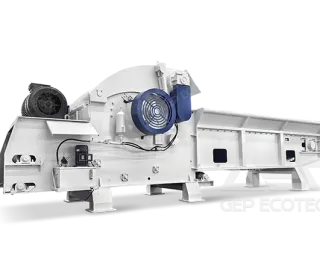
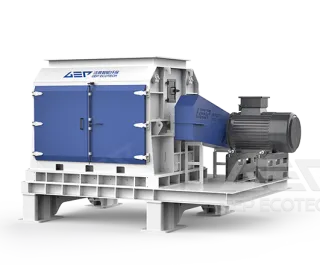
A complete biomass co firing pretreatment production line consists of chain plate conveyor, double shaft shredder, magnetic separator, screening equipment, hammer mill, high-speed hammer mill, and screw conveyor connected in series. This system realizes the integrated design of "graded shredding+collaborative sorting".
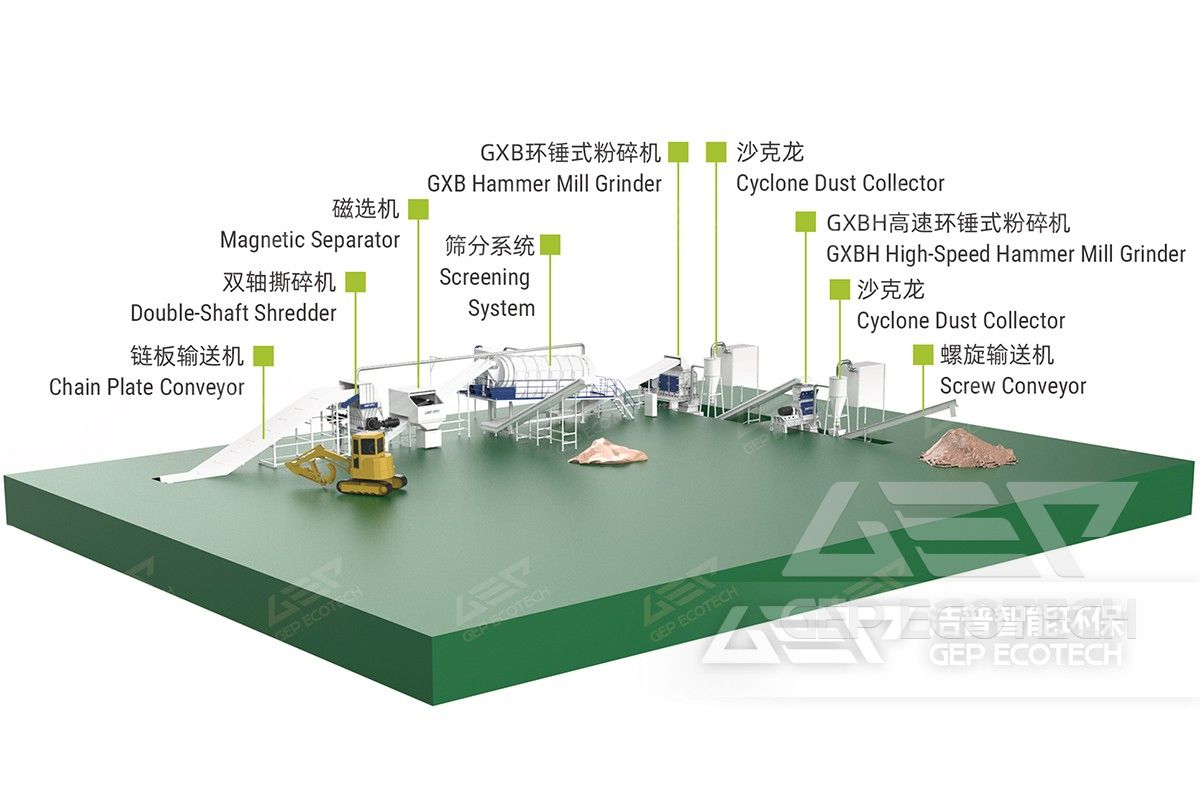
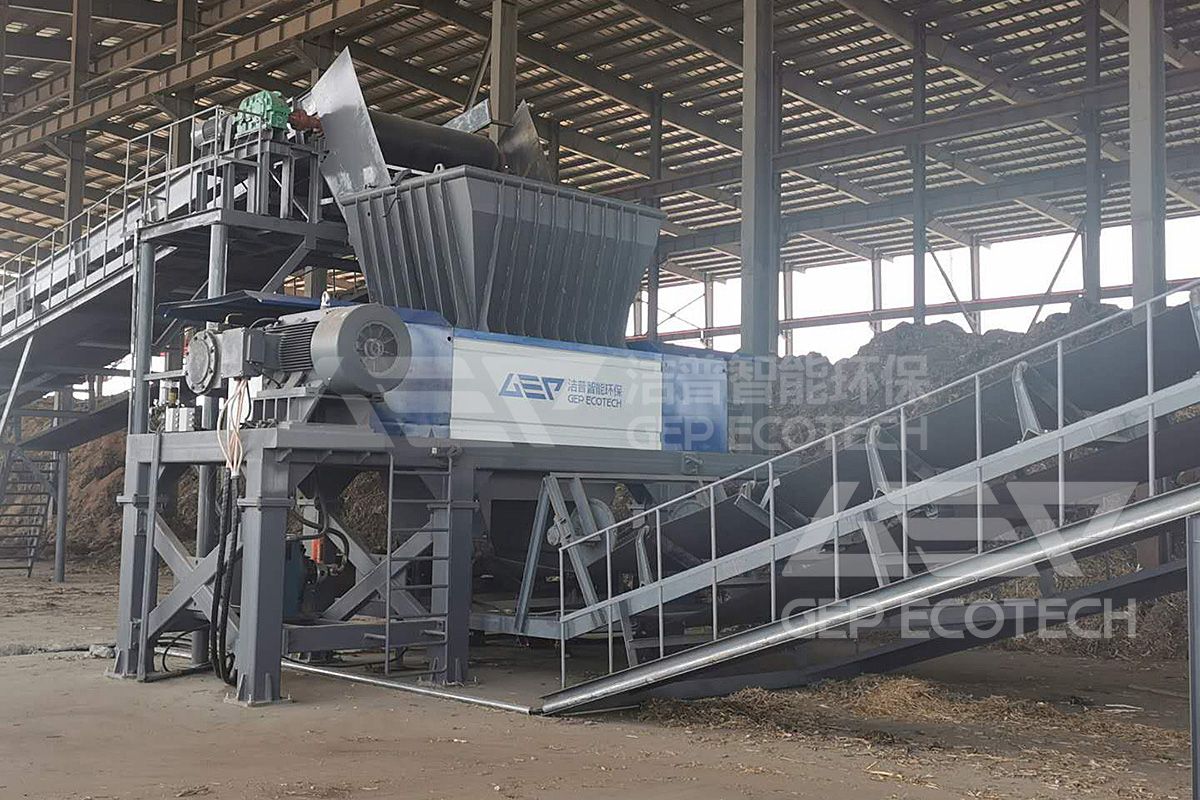
The first step: rough shredding to reduce volume. The chain conveyor stably feeds bundled straw and piles of wood into the double-shaft shredder. The double-shaft shredder adopts the principle of low-speed high torque shearing, which tears open and shreds large bundles of straw like "eating noodles". The task of this step is to "reduce volume"—to turn large pieces of material into small pieces, to break up the whole bundle of material, and to prepare for subsequent fine shredding.
Second step: Control and eliminate impurities. The primary shredded material enters the magnetic separator and screening equipment. The magnetic separator is responsible for removing metal impurities such as iron wire and nails mixed in the material; The screening equipment screens out foreign objects such as plastics and stones. Don't underestimate this step—once metal impurities enter the boiler, they can wear out equipment, block conveying pipelines, and in severe cases, may even cause the unit to shut down for maintenance. This' security checkpoint 'safeguards the safe operation of the entire production line.
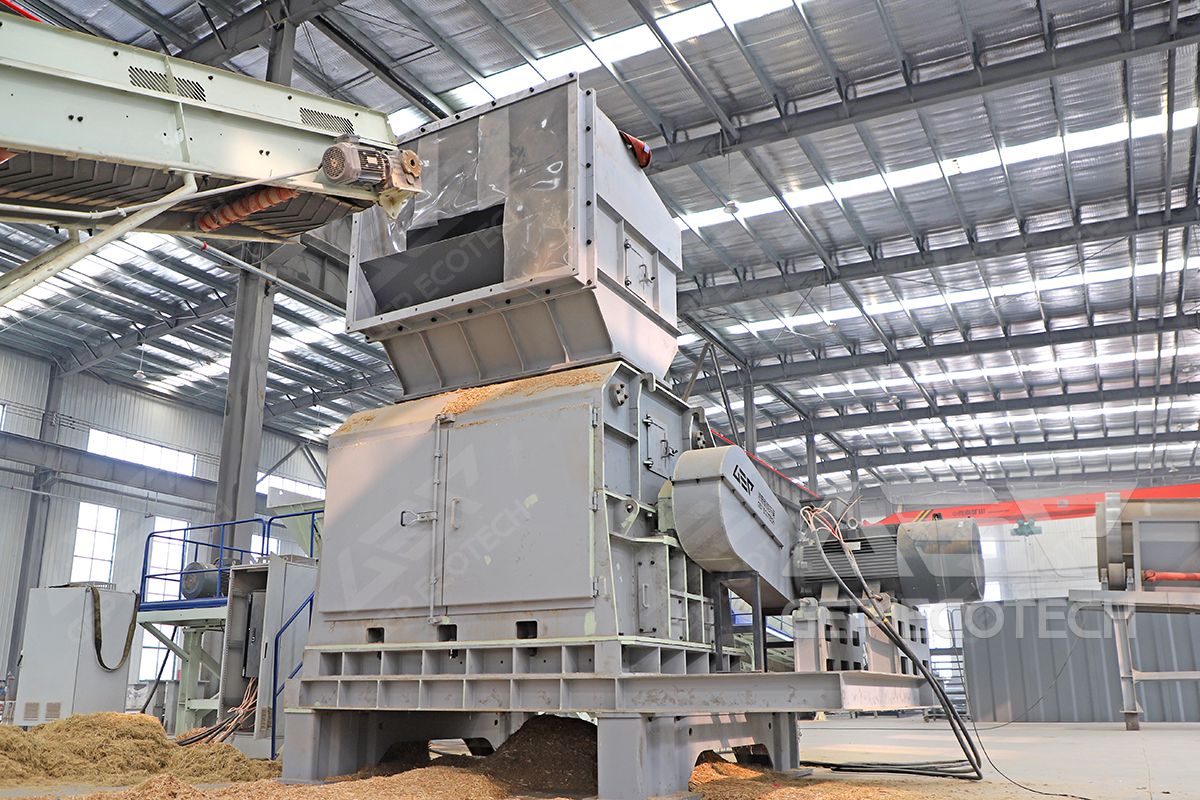
Third step: Fine shredding. After impurity removal, the material enters the hammer mill (biomass fine shredder) to complete medium particle size shredding, and then the high-speed hammer mill completes ultimate fine shredding through high-speed impact. With different aperture screens, the discharge particle size can be flexibly adjusted, and the minimum particle size can be controlled within 10mm, perfectly matching the feeding standards of biomass co firing boilers.
Finally, the biomass powder is centrally discharged through a screw conveyor. The entire system material is transported in a closed manner, with less dust and high automation. From straw, bark, and wood scraps in the fields to millimeter level industrial fuel powder, a pre-treatment production line has completed this "deformation record".
In the past, a bundle of straw was burned on the field ridge, leaving only choking smoke and worthless plant ash; Nowadays, the same straw has been processed through a complete set of pre-treatment techniques and turned into stable industrial fuel. For every 10 kWh of electricity connected to the grid, 1 kWh comes from these former "waste materials".
The calculation of biomass co firing is never a single environmental account: it reduces the amount of coal burned by thermal power plants, lowers the carbon emissions from chimneys, and eliminates the need for on-site incineration of agricultural and forestry waste to pollute the air. The combination of economic, environmental, and livelihood benefits is the core reason why this route can be quickly implemented nationwide.