In the innovative model that combines food waste resource utilization with black soldier fly (BSF) farming, a core challenge is how to transform complex, high-oil and high-moisture raw waste into safe, stable, high-quality feed suitable for BSF larvae. The key to achieving this transformation lies in a specialized, targeted pre-treatment system. Based on the specific needs of BSF farming, GEP ECOTECH tailors economical solutions according to the actual material conditions of each customer.
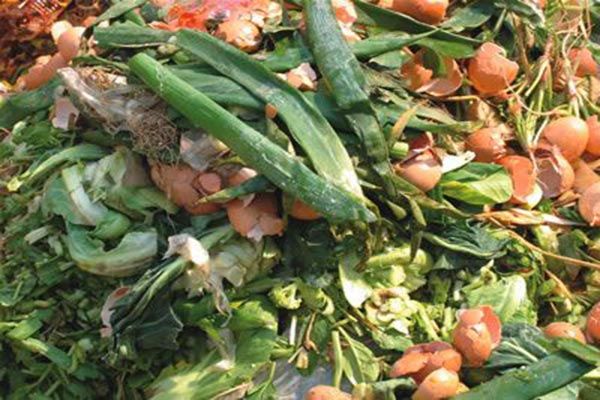
Food waste is a nutrient-rich raw material, but converting it into BSF breeding feed faces three main challenges:
Complex composition: It is rich in organic matter but mixed with large amounts of inorganic impurities such as plastic, metal, porcelain and shells, which can damage equipment and affect larval growth.
High moisture content: It generally exceeds 80%. Direct feeding can lead to anaerobic fermentation, produce harmful substances and result in low larval survival rates.
High oil content: Excessive oil, especially animal fat, can wrap around larvae, block their spiracles, cause suffocation and lead to digestive problems.
To ensure high conversion efficiency and stable BSF farming, pre-treated materials must meet the following core requirements:
Pure and free from impurities: Thoroughly remove physical impurities such as plastic, metal and shells.
Uniform physical form: The material should be in slurry or paste form, convenient for larval feeding and automated feeding.
Moderate moisture: BSF larvae prefer a certain solid form, and material with about 60% moisture is an ideal growth environment. Excessive moisture can cause suffocation and mold.
Low-fat safety: Excessive oil in kitchen waste can be toxic to the digestive system of BSF larvae. Therefore, most oil must be separated before feeding.
To achieve these goals, we recommend a market-validated three-stage pre-treatment process system focused on graded impurity removal, homogeneous pulping and precise oil and water separation.
Fine Sorting and Impurity Removal System
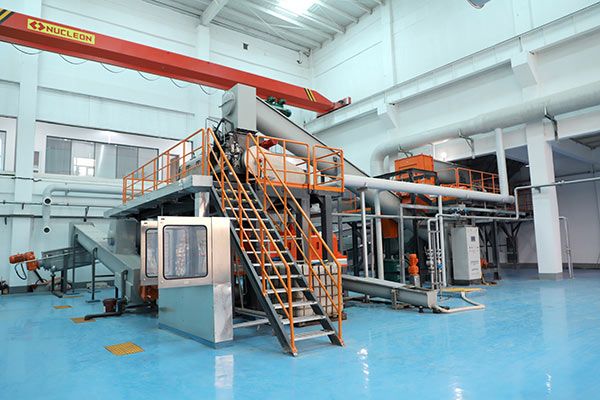
Conveying equipment such as a belt conveyor ensures uniform feeding. A bag breaker tears packaging, while a large-material sorting machine effectively separates lightweight plastics and paper. Fine sorting equipment includes a magnetic separator for ferrous metals, a wind separator for light impurities, and a hydraulic cyclone for sand, gravel and glass slag based on specific gravity differences.
Efficient Grinding and Pulping System
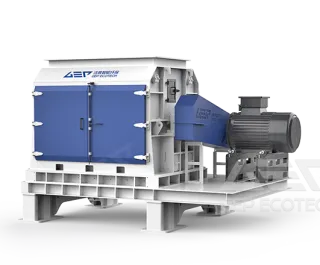
A high-strength crushing and pulping integrated machine features anti-entanglement and wear resistance. Through high-speed shearing and impact, it quickly crushes fruits, vegetables, fibers and even small bone residues into a homogeneous slurry with good fluidity, achieving volume reduction and homogenization.
Core Oil and Dewatering System
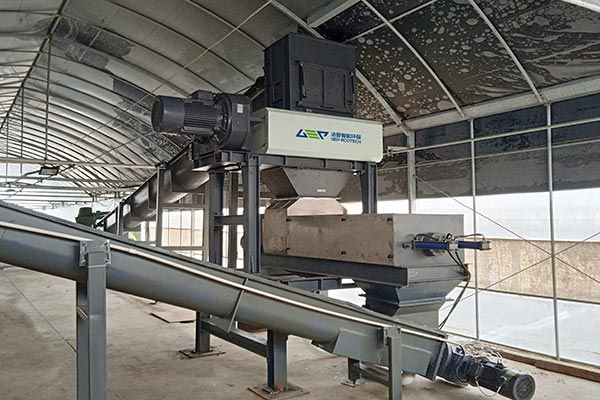
A spiral dewatering machine receives the slurry and achieves efficient solid-liquid separation through the strong squeezing force of the spiral shaft in the screen. The output is organic solid residue with 70%–80% moisture, which is the main feed base for BSF farming and can be easily adjusted to optimal breeding moisture by adding auxiliary materials such as bran. A three-phase horizontal centrifuge uses high-speed centrifugal force to separate wastewater into crude oil, wastewater and a small amount of sludge. The crude oil is a high-purity industrial-grade raw material that can be sold for significant economic return; wastewater enters subsequent treatment such as anaerobic digestion; sludge can be recirculated or treated separately.
However, GEP ECOTECH does not apply one fixed configuration to every project. When receiving an inquiry, we first evaluate the customer’s specific material: Is it high-oil kitchen waste from restaurants and canteens, or low-oil food waste from vegetable and fruit processing? What are the moisture content, impurity composition, capacity and target output? Based on these details, we propose different but always economical disposal solutions.
For high-oil kitchen waste, we recommend a complete and reinforced configuration: full sorting and impurity removal, crushing and pulping, spiral dewatering, and three-phase centrifugation for precise oil separation. The efficient oil removal protects larval health and improves conversion rates.
For low-oil food waste, we simplify the configuration economically. The front-end sorting, impurity removal, shredding and pulping, and spiral dewatering remain essential, but the oil separation module can be simplified, and using a compact oil-water separation step where necessary. This avoids over-configuration, lowers capital and operating costs, and still produces clean, homogeneous solid residue that can be adjusted to about 60% moisture for BSF feeding.
GEP ECOTECH has delivered multiple successful kitchen waste pre-treatment projects for BSF farming and has rich industry experience. By choosing GEP ECOTECH, you receive a scientifically designed, reliable and cost-effective solution tailored to your material and project goals.