Construction waste crushing lines—jaw crushers, impact crushers and multi-layer vibrating screens—generate substantial dust. Without effective control, dust pollutes the workplace, affects workers' health and may lead to complaints or environmental penalties. Efficient dust removal is therefore essential for resource utilization. Recently, GEP ECOTECH handled a construction waste recycling project in Russia. The client required reliable dust control for an enclosed plant. We provided two options—wet dust reduction and dry dust reduction—and compared them against the project's climate, plant layout, material requirements and environmental targets. This article summarizes the comparison and the selection logic.
Wet Dust Reduction: Principle and Best-Fit Applications
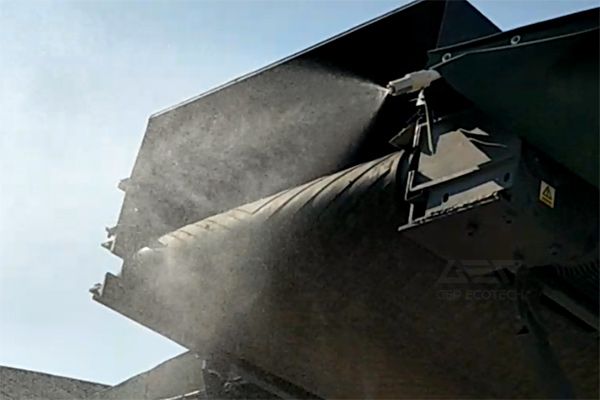
Wet dust reduction uses water sprays or sprinklers to wet, capture and coalesce airborne dust, causing particles to settle or be carried away. Spray nozzles are placed at crushing, screening, discharge and conveyor transfer points; sprinklers cover stockyards and roads. The system is simple—pump, piping and nozzles—and has a relatively low initial investment. It covers large areas and is well suited to open or semi-open spaces such as open stockyards, loading areas, transport roads and coarse crushing sections. Settled dust forms slurry and is not easily re-raised. Water can also handle dust with some viscosity and high temperature and provide a cooling effect. In some industries, it can meet finished-product moisture requirements and produce wet sand. For large-area unorganized dust control and auxiliary dust suppression, wet dust reduction is a practical and cost-effective choice.
Dry Dust Reduction: Pulse Bag-Type Systems
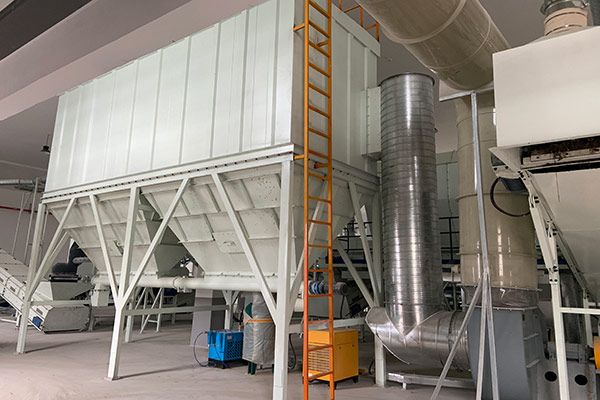
Dry dust reduction mainly uses pulse bag-type dust collectors. Dust-laden gas passes through porous filter bags; dust is retained on or inside the bags, and clean gas is discharged. As the dust layer thickens, system resistance rises, and pulsed compressed air is injected in reverse to remove the dust layer into the ash hopper. This system achieves high dust removal efficiency, including fine dust, and supports strict environmental compliance. Dust is collected dry, so material moisture is not increased and subsequent screening and product quality are unaffected—important for dry aggregate production. No wastewater or sludge is generated; collected dust is a dry powder that can be handled and recycled as filler or brick-making material. Valuable dust such as stone powder can be recovered. The system offers high automation, stable operation, automatic pulse cleaning and ash unloading, and manageable maintenance with regular filter bag replacement. Because it uses no water, it is not affected by winter freezing; in cold regions, ash hoppers and pipes only need insulation and anti-condensation measures.
Russian Enclosed Plant: Pain Points and Solution Selection
The Russian project had several clear pain points. First, the plant is in a cold region with a long winter, so the dust control system must operate reliably in low temperatures. Second, the production line is inside an enclosed plant, not an open or semi-open yard; the solution must keep the floor dry, maintain equipment access and avoid electrical safety risks from water accumulation. Third, the client needs effective capture at key dust-generating points and fine dust control to meet environmental requirements. Fourth, material moisture must remain stable to avoid affecting screening efficiency and aggregate quality. Fifth, secondary dust from ash unloading and dust storage must be controlled inside the plant. Finally, the system must be practical to operate and maintain over long winter periods.
We compared both options against these conditions. Wet dust reduction is strong for large open areas, roads, stockyards and coarse crushing, but this project is an enclosed, cold-region plant where a water-free approach is more suitable. We therefore recommended dry dust reduction with pulse bag-type collectors as the main solution. The design covers dust points with dust covers and ducting, uses pulse bag collectors for high-efficiency capture, applies insulation and anti-condensation measures to ash hoppers and pipelines, and adopts sealed ash unloading and dust storage to prevent secondary dust. This configuration supports environmental compliance, keeps materials dry, avoids water and sludge handling, and operates reliably in winter. Wet dust reduction can remain an auxiliary option for non-winter road or stockyard dust control if needed.
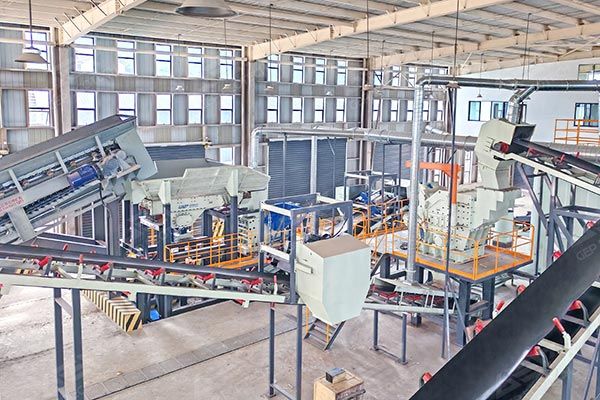
For key dust-generating processes in mine and construction waste lines, where compliance, dry materials and dust recovery matter, pulse bag-type dust removal is often the preferred choice. Wet dust reduction remains valuable for large-area unorganized dust and auxiliary suppression. GEP ECOTECH evaluates budget, environmental requirements, material characteristics, water conditions, climate and plant layout to deliver an economical, efficient and environmentally friendly dust control plan.